Day 6 — When Someone’s Past Makes Us Hesitate
Beyond the First Glance
Acts 9:26–28
Sometimes our hesitation has a reason.
Someone has caused harm. When we hear that they have changed, we want to believe it—but we also remember what happened.
The believers in Jerusalem faced that tension when Saul arrived.
He had persecuted Christians, dragging believers away to prison. Yet on the road to Damascus, the risen Jesus confronted him. Saul became a follower of the Savior whose people he had attacked.
When he tried to join the disciples in Jerusalem, they were afraid. They did not believe he was truly a disciple.
Their caution was reasonable. Caution is not always unbelief or unforgiveness. Sometimes it is wisdom shaped by real harm.
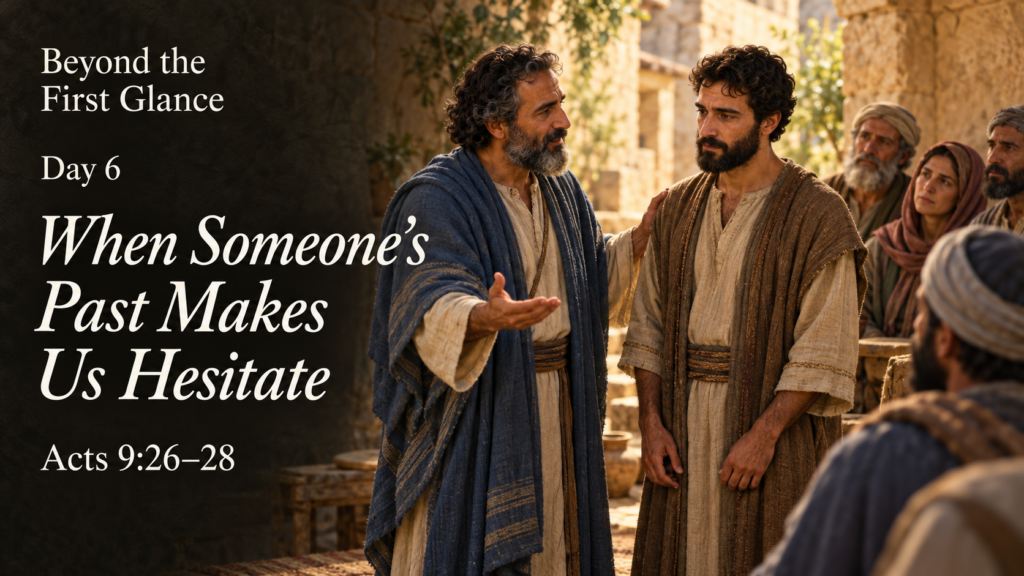
Then Barnabas stepped in.
He brought Saul to the apostles and explained how Saul had seen the Lord, how Jesus had spoken to him, and how Saul had boldly preached in Jesus’ name at Damascus.
Barnabas pointed to evidence of Saul’s changed direction. Saul was then able to move among the believers and speak boldly in the Lord’s name.
This passage does not ask us to accept every claim of change. Genuine repentance is more than words. It shows a changed direction, a humble spirit, and growing obedience to Christ.
Trust may take time, and wise boundaries can remain necessary. Forgiveness does not require pretending the harm never happened. Restoration requires wisdom, accountability, and care for those who were hurt. The church must protect vulnerable people.
But caution should leave room to recognize God’s transforming grace.
We may need that reminder when someone begins following Christ. We may also wonder whether our own past will always define us.
Saul’s persecution was serious sin, yet it was not beyond Christ’s power to forgive.
Jesus died for our sins and rose again. Everyone who repents and trusts in Christ alone is forgiven by God’s grace—not because they have fixed themselves, but because Jesus died and rose for sinners. Through His Spirit, He changes us and teaches us to follow Him.
In Christ, our past may still have consequences, but it no longer has the final word over who we are. We belong to Him.
Barnabas helped the believers recognize what Christ had done. We, too, can practice discernment while making room for grace.
Reflection
- How did Barnabas point to evidence of Saul’s changed direction?
- How can wisdom, accountability, and hope work together when trust has been damaged?
Prayer
Father, thank You for Your mercy through Jesus. Give us wisdom to protect those who are vulnerable and recognize genuine repentance. Help us practice patience and accountability while remaining open to Your transforming grace. Amen.